
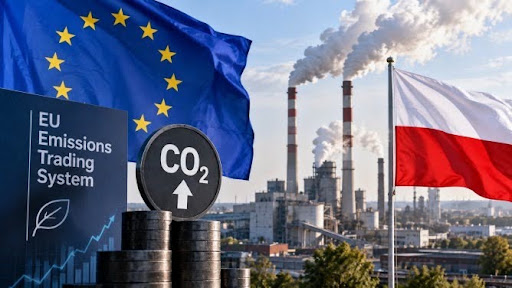
Polish businesses are grappling with escalating costs attributed to the European Union’s Emissions Trading System (ETS), raising alarms over the nation’s industrial competitiveness. Representatives from the energy sector highlight that ETS-related expenses can comprise up to 50% of electricity costs for some Polish industries, a stark contrast to the EU average of around 11%. This substantial financial burden underscores the challenges Poland faces as it transitions from one of Europe’s largest coal-dependent power systems.
In response to these pressures, Polish officials are advocating for adjustments to the ETS to mitigate its impact, while still advancing the country’s goals of reducing emissions. As part of its energy transformation, Poland has been actively expanding its investment in renewable energy sources, energy storage, offshore wind, and nuclear power. Notably, in July, renewable energy accounted for 41.6% of Poland’s electricity mix, marking a significant milestone where renewable energy generation surpassed coal-fired power for the first time.
The country is also striving to enhance its energy independence by decreasing reliance on Russian gas. This effort includes diversifying its energy supply through increased imports of liquefied natural gas (LNG) and the utilization of the Baltic Pipe. These moves are part of a broader strategy to secure energy sources while continuing to cut emissions.
Polish authorities emphasize that while they are committed to maintaining the momentum of their energy transition, they seek more flexibility and time to ensure the protection of industrial sectors and economic competitiveness. They are calling for sustained investments in new power-generation capacities, enhancements to electricity grids, and improvements in storage and system flexibility. This approach aims to balance the urgent need for environmental progress with the practicalities of economic stability.