
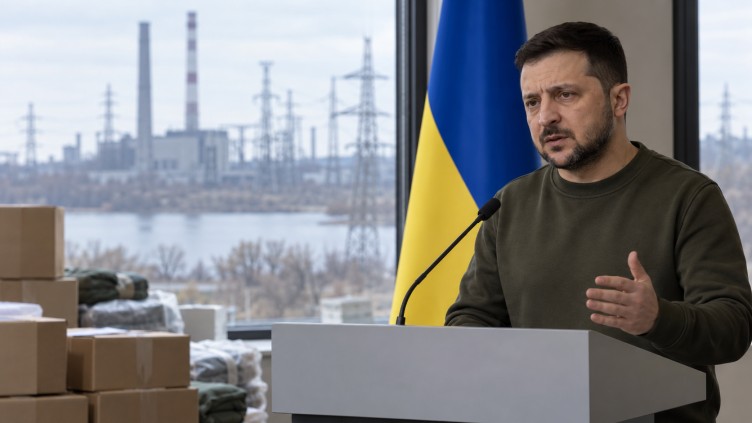
Ukrainian President Volodymyr Zelensky announced that a proposed energy ceasefire with Russia has not been successful, as Russian forces continue to target Ukraine’s energy infrastructure. Speaking in The Hague alongside Dutch Prime Minister Rob Jetten on October 28, Zelensky stated that while Ukraine was in favor of a US-backed proposal to halt attacks on energy facilities, Russia has not adhered to the agreement. As a result, Ukraine remains committed to defending its energy infrastructure against ongoing attacks.
Despite the setback on the energy front, Zelensky highlighted positive developments in a separate humanitarian truce in the Russian-occupied town of Oleshky, located in the southern Kherson region. The truce, mediated by the United States and effective since October 27, aims to facilitate humanitarian operations and the evacuation of civilians from the area. Zelensky expressed gratitude towards Washington for its role in establishing the truce and hoped it would aid in safe evacuations.
The Ukrainian leader also revealed plans for upcoming trilateral peace negotiations involving Ukraine, the United States, and Russia, scheduled to take place in Abu Dhabi between November 6 and 10. The discussions are expected to cover a range of topics, including ceasefire arrangements, energy infrastructure, maritime security, prisoner exchanges, and the return of Ukrainian children. Zelensky emphasized the importance of technical-level meetings to lay the groundwork for these negotiations, although a direct meeting with Russian President Vladimir Putin has not been confirmed.
Furthermore, Zelensky underscored the necessity of involving European countries in discussions about Ukraine’s security guarantees and the wider security framework of Europe. He affirmed Ukraine’s commitment to pursuing peace talks, even if European representatives are not initially present.
During Zelensky’s visit, the Netherlands announced a significant aid package for Ukraine, comprising €500 million in military assistance and €1.2 billion in non-military support over three years. Dutch Prime Minister Rob Jetten stated that his government is collaborating with international partners to procure additional air-defense interceptors for Ukraine, aiming to bolster support as the country faces another winter of Russian attacks.