
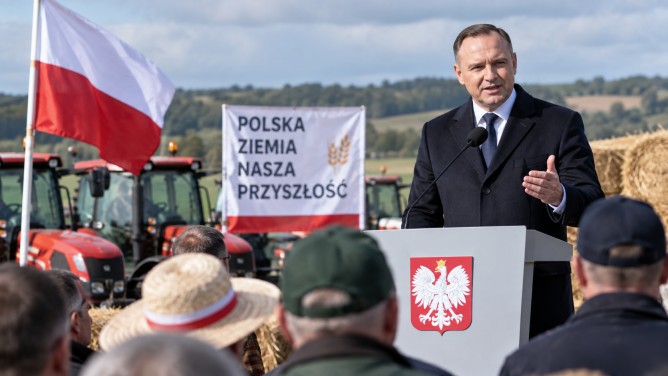
During the Jasna Góra Harvest Festival and Farmers’ Pilgrimage in Częstochowa, Polish President Karol Nawrocki lauded farmers as crucial defenders of the nation’s food security, cultural heritage, and rural communities. He emphasized the critical role of Poland’s countryside in maintaining national sovereignty through a steady food supply and highlighted the necessity for state support to navigate challenges such as droughts and frosts. Nawrocki stressed that farmers should not face these adversities alone and deserve robust backing from the government.
Nawrocki portrayed Polish farmers as stewards of the land and guardians of cultural traditions, underscoring the importance of rural communities and organizations in upholding Polish customs, religious practices, family values, and folk culture. He criticized initiatives that he perceives as threats to Polish agricultural land and expressed firm support for keeping such lands under Polish ownership. Nawrocki referenced a legislative effort aimed at extending restrictions on the sale of Polish agricultural land and advocated for protective measures to sustain the productivity of rural areas.
The president voiced strong opposition to the European Union’s Mercosur agreement, expressing concerns about its potential adverse effects on Polish farmers and agricultural production. He also took issue with the EU Green Deal, calling for a more balanced consideration of the needs and concerns of Poland’s rural population. Nawrocki emphasized his commitment to amplifying farmers’ voices through proposed referendums on climate policy and the Green Deal, critiquing senators for dismissing these initiatives and urging them to be more receptive to the perspectives of rural communities.
In his concluding remarks, Nawrocki pledged ongoing support for the Polish countryside, expressing confidence that rural communities comprehend Poland’s national interests and will persist in safeguarding the nation’s traditions, land, and agricultural future. He reiterated the significance of these communities in the broader narrative of national identity and sovereignty, ensuring that their voices remain an integral part of Poland’s policy discussions.