
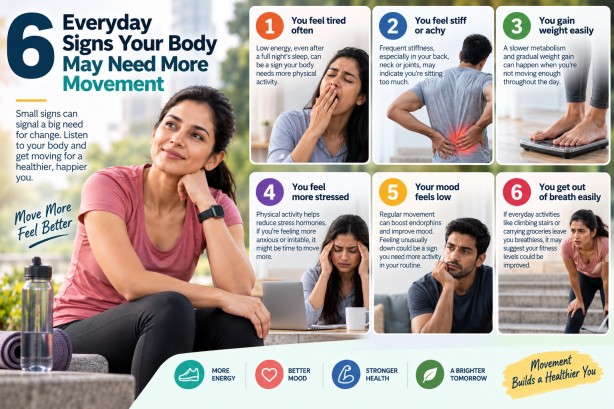
Even without the onset of pain, your body can reveal when it requires more movement. Spending extensive periods at a desk, behind the wheel, or simply inactive can gradually impact your flexibility, strength, balance, and overall energy. These changes might be subtle, surfacing during everyday tasks, but recognizing them early can motivate you to integrate more activity into your lifestyle before it begins to hinder your daily routine.
If you notice stiffness in your back, hips, shoulders, or legs upon standing after long sitting spells, it might be time to incorporate regular movement into your schedule. Short, frequent breaks can prevent prolonged inactivity and maintain joint comfort. Similarly, experiencing fatigue from climbing stairs or performing basic tasks could signal a need to boost your fitness levels. Regular physical activity can enhance stamina, making everyday activities less taxing.
A sense of sluggishness, both physically and mentally, can also indicate insufficient movement. Hours of continued sitting can sap your alertness and energy. Breaking this cycle with a quick walk, stretch, or brief movement can revive your energy and break sedentary habits. Additionally, if balancing on one leg or swiftly turning becomes challenging, your balance and coordination might need attention. Activities like walking, strength training, and balance exercises can enhance stability as part of your routine.
Slumping posture at your desk or struggling to maintain a comfortable sitting or standing position may result from weak or underused muscles due to prolonged sitting. Strengthening the core, back, and legs while taking regular breaks from sitting can improve posture and movement. Moreover, if bending, squatting, walking, or rising from a chair progressively feels tougher, don’t dismiss it as merely aging. Lack of activity can lead to decreased strength and flexibility, but gradually introducing more movement can preserve mobility and independence.
Engaging in more activity doesn’t necessarily mean lengthy gym sessions. Simple actions like taking short walking breaks at work, stretching after long periods of sitting, opting for stairs, and incorporating basic strength or balance exercises can increase your daily movement. Consistency is crucial, as small, regular movements are often more sustainable than sporadic intense workouts. However, if changes in movement are coupled with persistent stiffness, significant weakness, numbness, dizziness, or ongoing pain, consulting a healthcare professional is advisable. In essence, your body might signal the need for increased activity through signs like stiffness, low stamina, poor balance, sluggishness, or difficulty with everyday tasks, rather than through pain. Paying attention to these early signs and gradually adding more movement into your daily routine can enhance strength, mobility, energy, and overall well-being at any age.