
Robert Redford, the cinematic icon who passed away at 89, possessed a rare gift: the ability to convey a universe of emotion with just a look. His legacy as a romantic hero is built not just on his famous roles, but on the quiet, powerful moments where his expressions spoke louder than any dialogue ever could.
This talent was never more apparent than in the 1973 classic The Way We Were. As Hubbell Gardiner, his final scene with Barbra Streisand is a masterclass in understated acting. The bittersweet recognition, the gentle brush of her hair, and the faint, sad smile in his eyes tell the entire story of their love and what was lost. It is an image of unforgettable romance and profound regret, all communicated with minimal words.
Similarly, in Out of Africa, his portrayal of Denys Finch Hatton was defined by his captivating presence. Opposite Meryl Streep, his gaze could be adventurous, tender, or distant, reflecting his character’s untamable spirit. Redford made audiences believe in this epic romance through the sheer force of his charismatic, yet nuanced, performance.
Though celebrated for this romantic image, Redford was a serious actor who sometimes bristled at the “heartthrob” label. He actively pursued complex roles to prove his depth, but it was precisely this underlying intelligence that made his romantic heroes so compelling. He gave them a soulfulness that elevated them beyond simple archetypes.
With the death of Robert Redford, we have lost an actor whose face was a canvas for some of cinema’s most powerful emotions. He didn’t just play romantic heroes; he inhabited them, bringing a subtle melancholy that made their stories timeless. His ability to communicate love and loss with a single glance is a legacy that will endure.
A Legacy in Looks: How Robert Redford Communicated Love and Loss
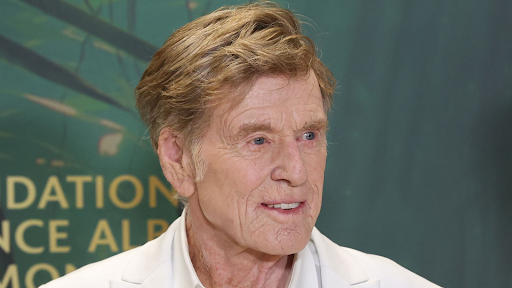
Picture Credit: www.heute.at
109