
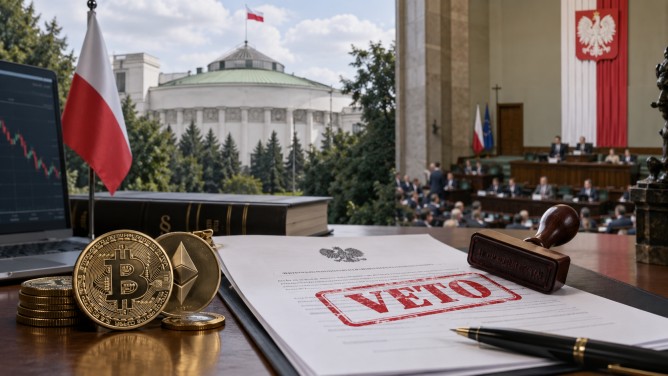
In a recent parliamentary vote, Poland’s Sejm did not succeed in overturning President Karol Nawrocki’s veto on a bill intended to regulate the country’s crypto asset market. This marks the third time the legislation has failed to gain approval, as Nawrocki has consistently rejected it, citing unresolved issues. On Friday, out of 442 members of parliament who cast their votes, 241 were in favor of rejecting the presidential veto, while 198 opposed the move, and three abstained. Despite the majority, the measure fell short of the three-fifths majority required to override the veto.
President Nawrocki has been steadfast in his opposition to the proposed crypto regulation, having previously vetoed the bill in December 2025 and again in February 2026. He has expressed concerns that the existing draft does not adequately address the issues raised by his office and requires substantial amendments before he would consider endorsing it. The repeated vetoes underscore the ongoing challenges in reaching a consensus on how to effectively regulate Poland’s burgeoning cryptocurrency market.
The president has, however, indicated a willingness to approve the legislation if it undergoes significant changes to address the identified deficiencies. This stance suggests that there is room for negotiation and revision, but until a revised version is introduced, the proposed regulations remain in legislative limbo. The parliament’s inability to muster the necessary votes to override the veto illustrates the divided opinions among lawmakers regarding the bill’s sufficiency and potential impact.
With the crypto market continuing to evolve rapidly, the absence of a clear regulatory framework leaves Poland in a precarious position. As digital currencies gain prominence, the need for comprehensive rules to govern their use and prevent potential financial risks becomes ever more pressing. The ongoing debate highlights the complexities of crafting legislation that balances innovation with consumer protection and market stability.