
In a remarkable legal maneuver, President Trump turned to a provision of US trade law that has existed for half a century but has never once been invoked — using it to impose a 15% tariff on all imports just hours after the Supreme Court invalidated his previous tariff authority. The move underscored Trump’s willingness to push the boundaries of executive power and his determination to keep his trade agenda alive regardless of judicial setbacks.
Section 122 of the Trade Act of 1974 permits a president to impose tariffs of up to 15% for a 150-day period without congressional approval. Its long dormancy reflects the fact that no previous president had found it necessary or politically viable to use. For Trump, it represented an immediately available tool that could be deployed faster than any congressional process and that — unlike his IEEPA authority — had not yet been tested and invalidated by the courts.
The global reaction was a mixture of frustration and concern. German Chancellor Merz called tariff uncertainty “poison” for economies on both sides of the Atlantic and announced plans to bring a unified European stance to Washington. France’s Macron struck a more philosophical tone, using the occasion to celebrate judicial checks on executive authority — a pointed commentary on Trump’s furious response to the Supreme Court ruling.
Countries with existing tariff arrangements with the US found themselves in a difficult position. The UK had believed its 10% arrangement was settled, only to find the ground shift beneath it overnight. British trade officials called the new rate damaging and urged Washington to provide the kind of stability that allows businesses to invest and plan with confidence.
Trump himself showed no interest in stability. He attacked the Supreme Court with unusual ferocity, called justices “unpatriotic,” criticized his own nominees, and praised the three dissenters. As the administration prepares for the 150-day window to develop new tariff mechanisms, legal experts predict the untested 1974 provision will face its own court challenges — meaning the trade war’s legal battles are far from over.
Trump Raises Tariffs to 15% Using a Law No President Has Ever Used Before
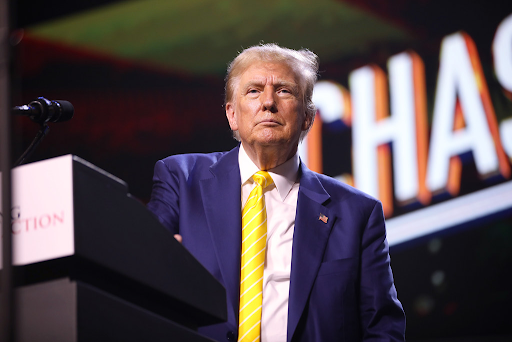
Picture Credit: www.flickr.com
62